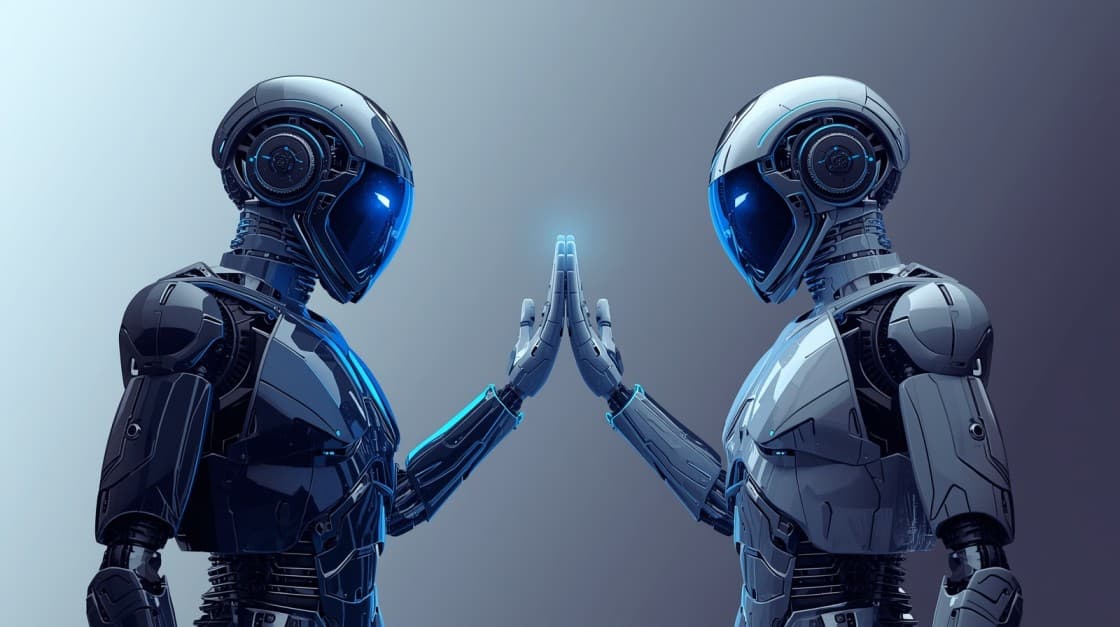

The competition among leading AI assistants—Claude, ChatGPT, and Gemini—has intensified as tech giants race to define how people work, learn, and create with artificial intelligence. Backed by Anthropic, OpenAI, and Google respectively, these models are being rapidly updated with stronger reasoning, multimodal skills, and enterprise-ready features. As adoption grows across businesses and consumers in 2024 and 2025, the differences between them matter more than ever.
Background / Context
The current wave of generative AI builds on large language models trained on massive datasets, capable of understanding and generating human-like text. ChatGPT popularized consumer-facing AI at scale, Claude entered with a strong focus on safety and long-context reasoning, and Gemini marked Google’s move to unify AI across search, productivity, and developer platforms. Together, they reflect a broader industry shift toward AI as a daily digital assistant rather than a niche tool.
Key Developments / Details
ChatGPT, developed by OpenAI, continues to lead in mainstream adoption. Its strengths include broad general knowledge, strong coding assistance, multimodal input (text, image, and voice), and deep integrations across productivity workflows.
Claude, from Anthropic, has gained attention for its ability to handle very long documents, nuanced writing tasks, and safety-focused design. It is often favored for research analysis, summarization, and enterprise knowledge work.
Gemini, Google’s flagship AI model, is tightly integrated with Google’s ecosystem, including Search, Docs, Gmail, and Android. Its standout capability lies in multimodal reasoning—processing text, images, audio, and code together—reflecting Google’s long-term AI-first strategy.
Executives from all three companies have emphasized ongoing improvements in reasoning accuracy, reduced hallucinations, and broader real-world usefulness as top priorities.
Technical Explanation (Simplified)
At their core, all three are large language models that predict the next word based on context. The difference lies in how much context they can remember, how safely they respond, and how well they connect to tools. Think of ChatGPT as a versatile all-rounder, Claude as a deep-thinking analyst, and Gemini as a highly connected assistant embedded across Google services.
Implications
For users, this competition means faster innovation, better quality responses, and more choice depending on specific needs—coding, writing, research, or everyday assistance. For businesses, it accelerates AI adoption in customer support, analytics, and content creation. At a societal level, the race raises important questions about trust, accuracy, and responsible AI deployment.
Challenges / Limitations
Despite rapid progress, none of these models are flawless. They can still produce incorrect or biased outputs, require careful prompting, and depend heavily on data quality. Concerns around data privacy, over-reliance on AI-generated content, and regulatory oversight remain unresolved.
Future Outlook
The rivalry is expected to intensify with more advanced reasoning models, real-time web awareness, and deeper integration into operating systems and enterprise software. Analysts expect AI assistants to move beyond chat interfaces toward proactive, task-completing agents in the near future.
Conclusion / Summary
Claude, ChatGPT, and Gemini represent three distinct philosophies shaping the AI assistant era. While their approaches differ, their shared trajectory points toward more capable, contextual, and human-aligned AI—making this a space worth watching closely.