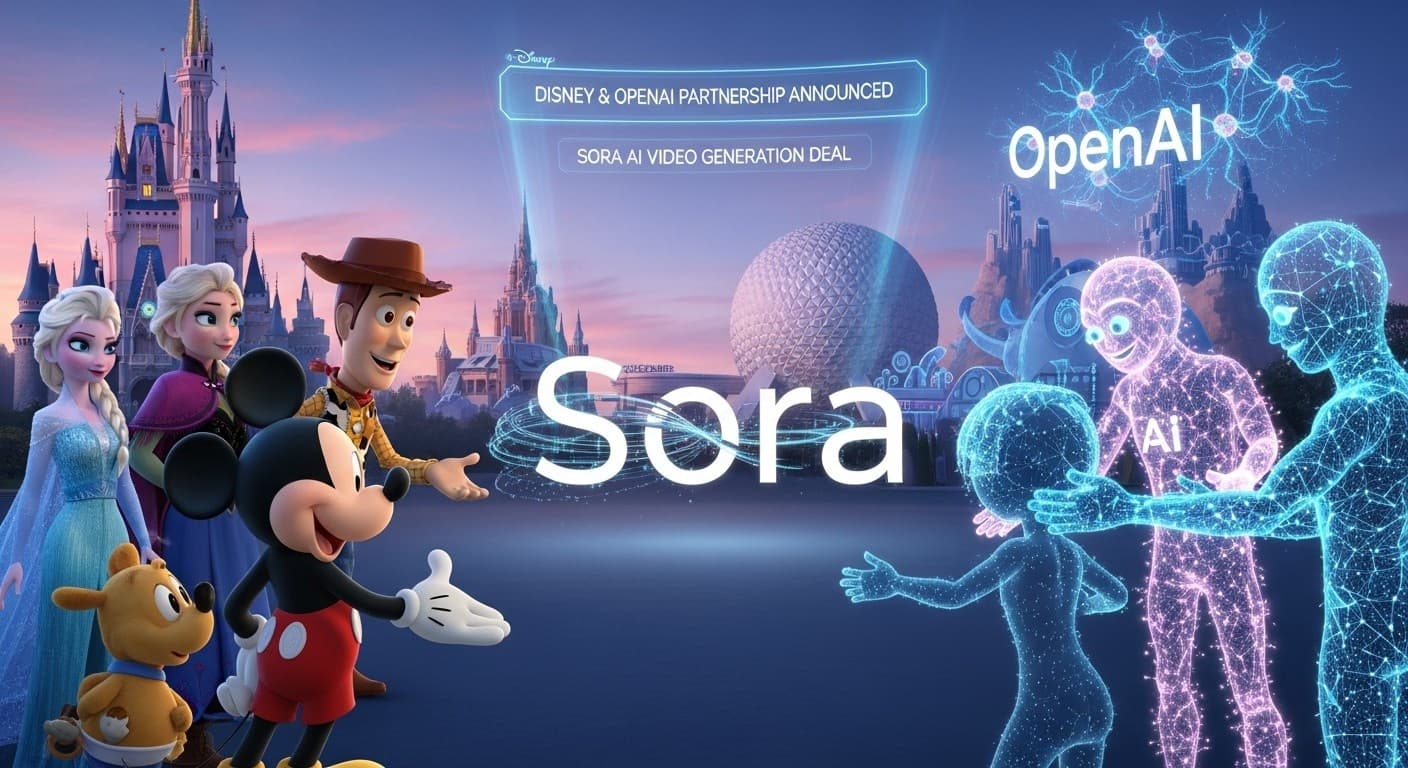

Disney has signed a deal with OpenAI that allows the company to use Sora, OpenAI’s text-to-video model, to generate AI-created video content. The agreement marks one of the most significant collaborations yet between a major Hollywood studio and a generative AI platform. Announced recently, the move highlights how traditional entertainment players are cautiously embracing AI tools amid rapid technological change and industry-wide debate over creative control.
Background / Context
The entertainment industry has been closely watching the rise of generative AI, particularly after tools capable of producing realistic images, scripts, and now videos entered the mainstream. Studios have been under pressure to innovate while also managing costs and navigating concerns raised by writers, actors, and creators. At the same time, AI companies have been seeking partnerships with established media brands to validate and refine their technology in real-world production environments.
Key Developments / Details
Under the agreement, Disney will be able to experiment with OpenAI’s Sora model to generate short-form and concept video content. Executives familiar with the deal say the focus is on early-stage creative workflows, such as storyboarding, visual prototyping, and pre-visualization, rather than replacing traditional filmmaking.
OpenAI has positioned Sora as a tool that can transform written prompts into detailed, cinematic video sequences. Disney leaders have described the partnership as a way to explore how AI can support creativity while maintaining the company’s long-standing emphasis on storytelling and quality.
Technical Explanation
Sora works by interpreting text descriptions and turning them into moving visuals, much like an advanced version of image generation models but extended across time. In simple terms, creators can describe a scene—its setting, mood, and action—and the system produces a video clip that matches those instructions. For studios, this can function like a fast, digital sketchbook for ideas before committing resources to full production.
Implications
The deal signals a broader shift in Hollywood, where AI is increasingly viewed as a productivity tool rather than just a disruptive threat. For Disney, it could mean faster ideation cycles and lower costs in early development. For the industry, the partnership may accelerate the adoption of AI-driven workflows, influencing how films, series, and even theme park content are conceptualized.
Challenges / Limitations
Despite the enthusiasm, significant concerns remain. Generative AI raises questions around intellectual property, data usage, and the protection of creative labor. There are also technical limits, as AI-generated video can struggle with consistency, fine detail, and longer narratives. Disney has emphasized that human creators will remain central to its production process.
Future Outlook
If successful, the collaboration could expand to additional use cases or inspire similar deals across the entertainment sector. Regulators, unions, and studios are likely to continue shaping guidelines for how AI tools are deployed. As models like Sora evolve, the balance between innovation and responsible use will remain under close scrutiny.
Conclusion / Summary
Disney’s deal with OpenAI marks a notable moment in the convergence of Hollywood and generative AI. While the partnership is still focused on experimentation, it underscores a growing reality: AI tools are becoming part of the creative toolkit. How they are governed and integrated will define the next chapter of digital storytelling.