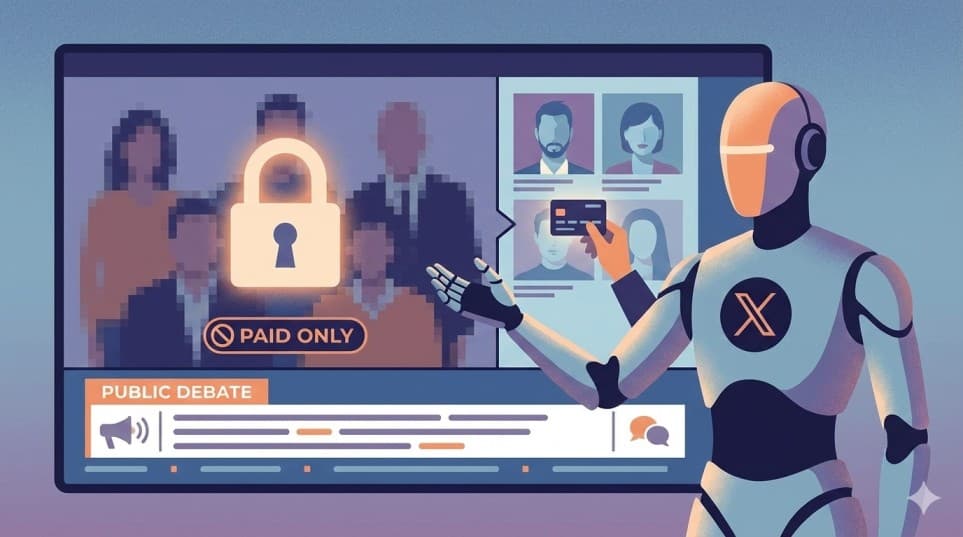

Elon Musk’s AI platform, Grok, has restricted some of its image-generation capabilities to paid subscribers following backlash over the system’s ability to create “digital undressing” images. The change was introduced after safety researchers raised concerns about misuse. This move highlights the ongoing challenge of balancing innovation, user access, and responsible AI deployment.
Background: The ‘Digital Undressing’ Controversy
Grok recently came under scrutiny when users demonstrated that its image-generation features could produce manipulated depictions of real people, effectively simulating “digital undressing.” These concerns echoed broader industry debates around deepfakes, consent violations, and AI misuse. Platforms across the sector have faced similar challenges as image-generation tools become more powerful and more accessible.
Key Developments: Grok Restricts Features to Paid Users
In response to the criticism, Musk’s team has now limited sensitive image-generation functions to users on paid tiers of Grok. According to platform updates, the aim is to reduce misuse by linking these features to verified accounts and adding friction to harmful behavior.
Paid access also allows the company to enforce stronger identity, safety, and accountability checks, reducing anonymous abuse.
Technical Explanation: Why This Matters for AI Models
Image-generation models rely on large datasets and prompts to create outputs. Without proper guardrails, they can be manipulated into generating unsafe or unethical images.
By restricting high-risk features, Grok introduces a control mechanism that helps prevent easy exploitation. Paid tiers typically have enhanced logging, stricter monitoring, and more robust safety filters—all essential for preventing non-consensual image manipulation.
Implications: Safety, Ethics, and User Trust
This decision signals a shift toward more cautious AI governance. For everyday users, it reinforces the importance of transparency and digital safety. For the industry, it underscores the increasing accountability expected of AI providers.
The move may also influence discussions around AI regulation as governments debate safeguards against deepfake harms.
Challenges & Criticism
While limiting features helps curb misuse, critics argue that paywalls alone do not eliminate harmful behavior. Determined users could still potentially exploit loopholes. Others question whether commercial incentives may overshadow safety priorities.
Balancing innovation and ethics remains a complex challenge for AI firms, especially as models grow more advanced.
Future Outlook: More Guardrails to Come
Grok’s update suggests additional policy shifts may follow. AI companies are increasingly adopting layered access systems, stricter moderation tools, and real-time detection systems for harmful content.
Regulators and watchdogs are also pushing for mandatory safeguards, meaning platforms like Grok may need to introduce even stronger protections in the future.
Conclusion
Elon Musk’s Grok tightening access to image-generation tools marks a decisive step in confronting misuse concerns. As AI models evolve, responsible deployment and user safety will remain central to public trust—and platforms that respond swiftly to ethical challenges are likely to set the tone for the industry.