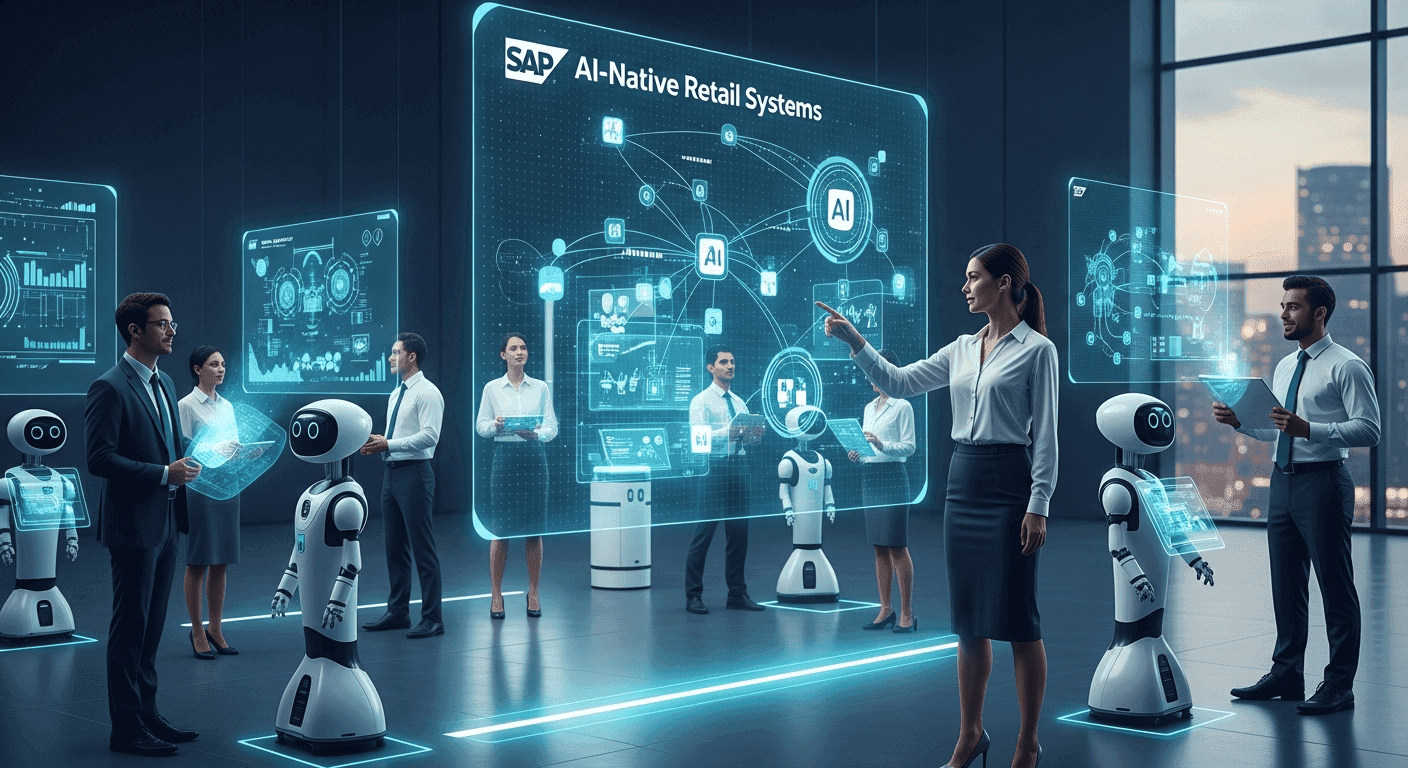

SAP has unveiled a preview of AI-native systems tailored for the retail sector, marking a significant evolution in enterprise software design. Instead of layering artificial intelligence onto existing platforms, SAP is rethinking retail systems from the ground up with AI embedded at their core. This matters because retailers face growing pressure from volatile demand, complex supply chains, and rising customer expectations. The preview targets large and mid-sized retailers seeking faster insights, automated decision-making, and more resilient operations. By positioning AI as a default capability rather than a feature, SAP is signaling a broader shift in how enterprise technology will be built and deployed in the years ahead. The move reflects the growing realization that traditional systems are no longer sufficient for real-time retail environments.
Background & Context
From ERP Foundations to Intelligent Retail
SAP has long played a central role in powering global retail operations through enterprise resource planning, supply chain management, and analytics platforms. Over time, retailers adopted AI-driven tools for forecasting, personalization, and inventory optimization, often as separate modules or integrations. These approaches delivered incremental gains but also added complexity. The rise of real-time commerce, omnichannel fulfillment, and unpredictable consumer behavior exposed limitations in legacy architectures. SAP’s AI-native preview represents the next step in this evolution, where intelligence is woven directly into transaction processing, planning, and execution layers rather than bolted on after the fact.
Expert Quotes / Voices
Industry Views on AI-Native Retail Systems
Christian Klein, CEO of SAP, said, “Retailers need systems that think in real time, not after the fact. AI-native design allows businesses to move from reacting to anticipating.”
A retail technology analyst noted, “This shift reduces latency between insight and action, which is critical for modern retail operations.”
A global retail operations executive added, “Embedding AI at the core changes how teams plan inventory, pricing, and promotions across channels.”
Market / Industry Comparisons
Standing Out in a Competitive Enterprise Landscape
Many enterprise software providers offer AI-powered features, but most rely on legacy system foundations. SAP’s AI-native approach differentiates itself by redesigning workflows to assume continuous learning and automation. Competitors focus on predictive dashboards and recommendation engines, while SAP emphasizes autonomous processes that adjust without manual intervention. This aligns with broader industry trends toward self-optimizing systems and reduced operational overhead. As retailers compare platforms, architectural flexibility and intelligence depth are becoming key differentiators alongside scalability and compliance.
Implications & Why It Matters
Faster Decisions, Leaner Operations
For retailers, AI-native systems promise more accurate demand forecasting, optimized inventory placement, and dynamic pricing strategies. Store managers and planners gain access to insights that update continuously as conditions change. At the organizational level, automation reduces manual intervention and shortens decision cycles. For customers, this can translate into better product availability, personalized experiences, and more consistent pricing across channels. On a broader scale, SAP’s preview highlights how enterprise AI is shifting from experimentation to mission-critical infrastructure.
What’s Next
From Preview to Production
SAP is expected to expand pilot programs and industry collaborations before rolling out AI-native retail systems more broadly. Future developments may include deeper integration with customer engagement platforms, sustainability tracking, and advanced workforce optimization. Adoption timelines will depend on how easily retailers can transition from existing systems without disrupting operations.
Pros and Cons
Opportunities and Challenges
Pros
- Real-time intelligence embedded in core processes
- Reduced reliance on manual planning and intervention
- Improved responsiveness across supply chains and channels
Cons
- Migration complexity for legacy system users
- Requires strong data governance and change management
- Higher initial learning curve for retail teams
Our Take
SAP’s AI-native preview represents a meaningful shift in enterprise retail technology. By rebuilding systems around intelligence rather than adding it later, SAP addresses structural challenges retailers have struggled with for years. The success of this approach will hinge on execution and ease of adoption.
Wrap-Up
As SAP moves from preview to deployment, AI-native retail systems could redefine how large-scale commerce operates. If widely adopted, this model may set a new standard for enterprise software, where intelligence is assumed, continuous, and invisible to the end user.