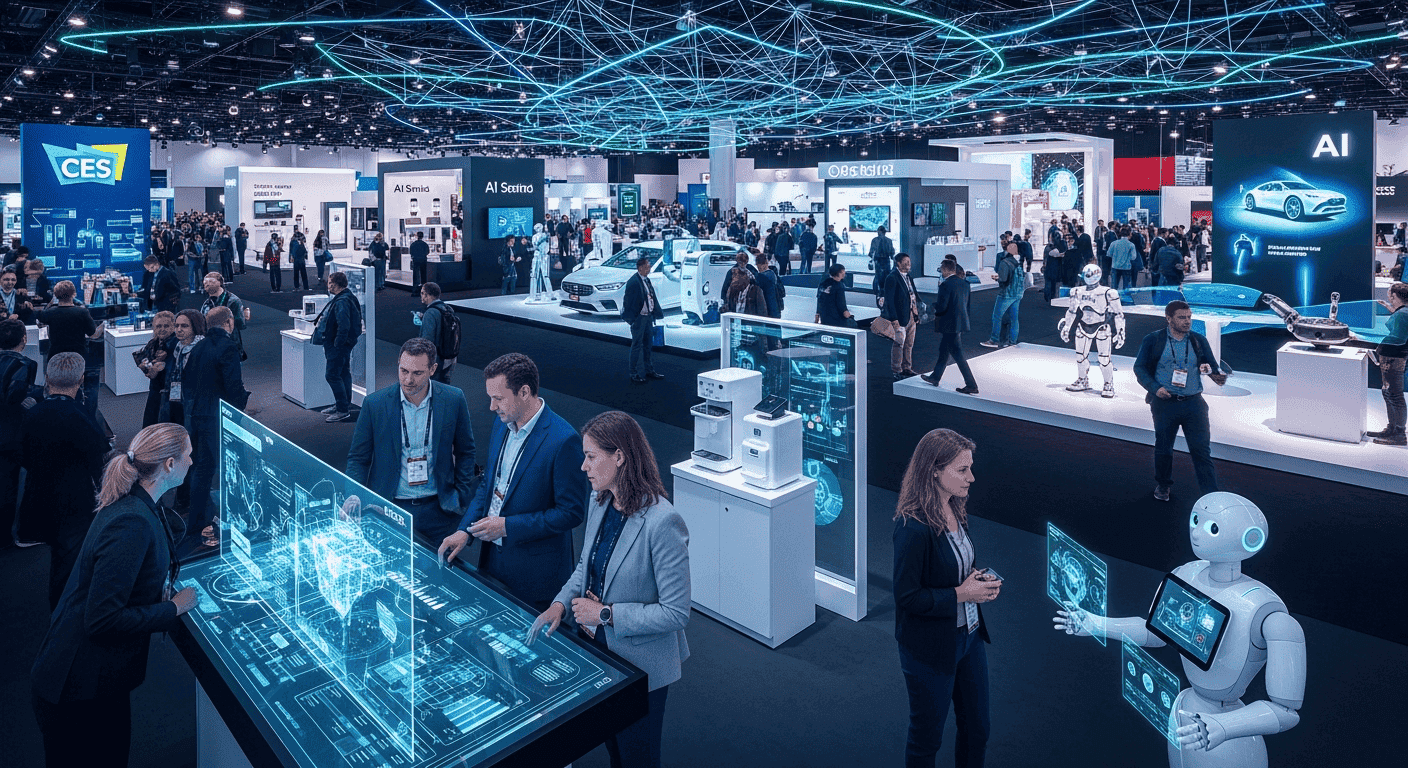

CES 2026 made one message unmistakably clear: artificial intelligence is no longer an add-on—it is the foundation of modern technology. Across the show floor, AI appeared in nearly every product category, from televisions and appliances to vehicles, laptops, wearables, and enterprise systems. This matters because it marks a shift from AI as a headline feature to AI as invisible infrastructure powering everyday experiences. Consumers, businesses, developers, and manufacturers are all impacted as expectations change around what devices should automatically understand, predict, and optimize. CES 2026 reflected an industry consensus that competitive advantage now depends on how deeply AI is integrated, not how loudly it is advertised. The event captured a moment where AI maturity met mass deployment.
Background & Context
From AI Demos to Default Technology
Earlier CES editions highlighted AI through experimental demos, concept devices, and cloud-based assistants. Over time, advances in chips, edge computing, and on-device processing reduced latency and improved privacy. By 2026, these developments converged. Manufacturers arrived at CES not to explain why AI matters, but to show how it quietly improves performance, efficiency, and personalization. The industry’s focus has shifted toward reliability, power efficiency, and real-world usefulness. AI has evolved from a selling point into a baseline expectation, similar to connectivity or battery life.
Expert Quotes / Voices
Industry Leaders on the AI Shift
A senior consumer electronics executive said, “AI is no longer a feature we add—it’s the layer that connects everything users do.”
An automotive technology leader stated, “The intelligence inside vehicles at CES 2026 rivals what data centers delivered just a few years ago.”
A semiconductor analyst noted, “What stands out this year is how much AI processing has moved to the edge, reducing dependence on the cloud.”
Market / Industry Comparisons
AI Becomes the New Standard
In previous years, differentiation centered on hardware specifications or industrial design. At CES 2026, differentiation came from intelligence—how devices adapt, learn, and collaborate. Compared to earlier AI waves dominated by chat interfaces, this generation emphasizes contextual awareness and automation. Competing ecosystems now race to offer the most seamless AI experiences across devices. The market has entered an era where consumers compare not just products, but intelligence ecosystems.
Implications & Why It Matters
A Redefined Relationship With Technology
For consumers, AI Everywhere means devices that anticipate needs, reduce manual input, and operate more efficiently. For businesses, it lowers operational friction while raising expectations for personalization and responsiveness. Developers face increased pressure to design responsibly as AI becomes embedded in critical systems. At a broader level, CES 2026 signals that AI literacy is no longer optional. As intelligence fades into the background, trust, transparency, and reliability become as important as innovation.
What’s Next
The Post-CES Trajectory
Following CES 2026, the focus will shift to execution at scale. Companies are expected to roll out AI-driven updates throughout the year rather than waiting for annual launches. Regulation, energy efficiency, and ethical AI practices will increasingly influence product roadmaps. The next phase will test whether AI Everywhere delivers consistent value beyond early adopters.
Pros and Cons
Benefits and Challenges of AI Everywhere
Pros
- Smarter, more personalized user experiences
- Improved efficiency across devices and systems
- Reduced friction through automation
Cons
- Increased reliance on opaque decision-making
- Higher demand for responsible AI governance
- Potential user discomfort with pervasive intelligence
Our Take
CES 2026 will be remembered as the moment AI stopped being a headline and became infrastructure. The challenge ahead is not inventing more intelligence, but ensuring it remains trustworthy, efficient, and human-centered. Companies that get this balance right will define the next decade of technology.
Wrap-Up
AI Everywhere at CES 2026 signals a permanent shift in how technology is built and experienced. As products move from smart to intuitive, the real test will be whether this intelligence quietly improves life without demanding attention. The era of ambient AI has officially arrived.