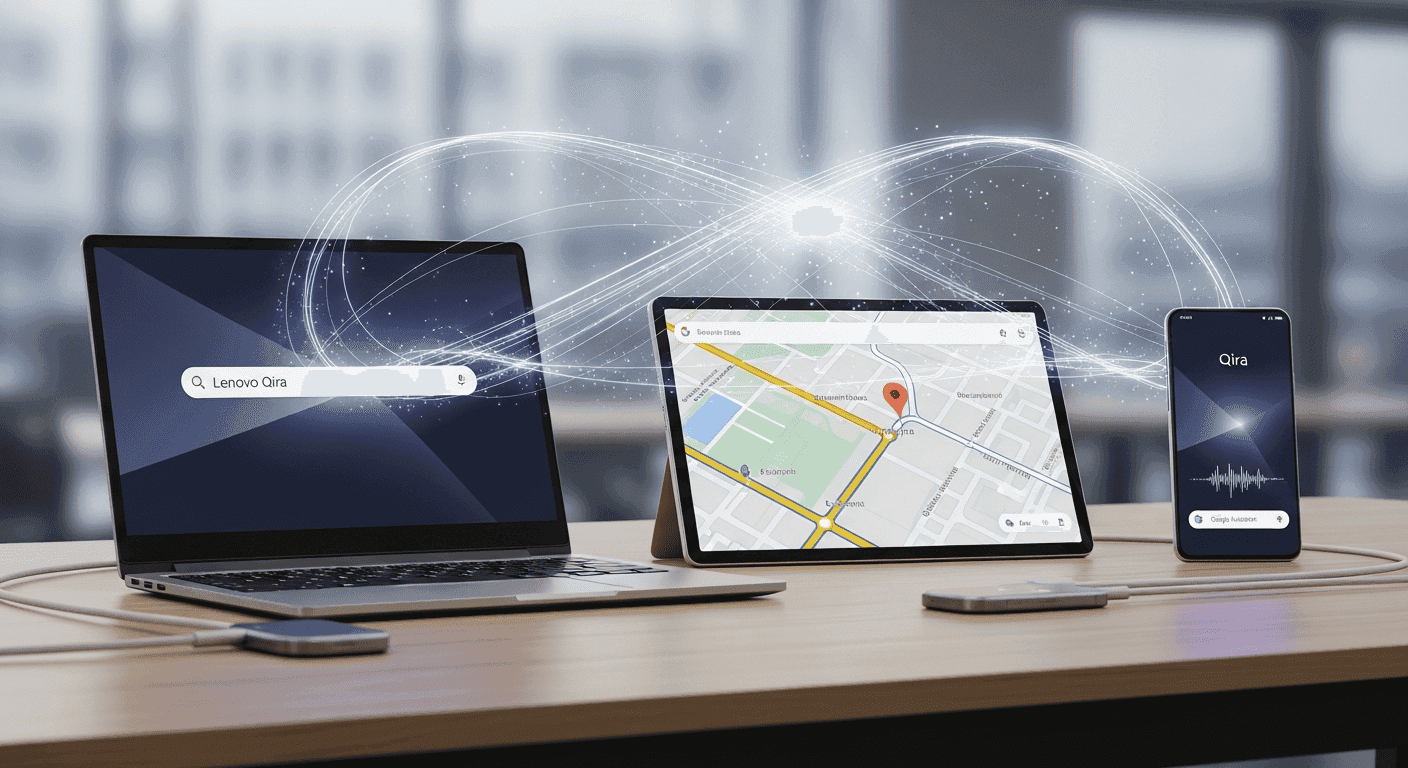

Lenovo has officially introduced Qira, a new cross-device AI assistant aimed at unifying how users interact with multiple devices throughout their day. The announcement matters because it positions Lenovo as a serious contender in the race to deliver practical, ecosystem-level artificial intelligence rather than isolated AI features. Qira is designed for professionals, enterprises, and everyday users who regularly switch between laptops, tablets, and smartphones. By focusing on continuity, contextual awareness, and device-to-device intelligence, Lenovo is addressing one of the most persistent pain points in modern computing: fragmented workflows. The move reflects a broader industry shift toward AI that operates quietly in the background, anticipating needs rather than responding to commands. For Lenovo, Qira represents a strategic step toward owning the user experience across hardware categories, not just selling individual devices.
Background & Context
Lenovo’s Shift Toward Ecosystem AI
Lenovo has spent the past several years repositioning itself from a hardware-first company to a solutions-driven technology provider. Its investments in AI-powered PCs, smart collaboration tools, and enterprise services laid the groundwork for an assistant like Qira. As users increasingly rely on multiple devices for work and personal tasks, demand has grown for intelligence that follows the user rather than staying locked to a single screen. Qira emerges from this context, designed to act as a connective layer across Lenovo’s device portfolio. The assistant builds on Lenovo’s experience in enterprise IT, where cross-platform interoperability and data continuity are critical.
Expert Quotes / Voices
Executive and Industry Perspectives
Yang Yuanqing, Chairman and CEO of Lenovo, said, “Qira reflects our belief that AI should simplify life by working across devices, not trapping users within them.”
A senior industry analyst commented, “Cross-device intelligence is the next competitive frontier, and Lenovo is signaling that it wants to compete at the ecosystem level, not just on specifications.”
A corporate IT leader added, “An assistant that understands context across devices has clear implications for productivity, especially in hybrid work environments.”
Market / Industry Comparisons
Competing in a Crowded AI Assistant Space
The AI assistant market is crowded with voice-first and app-centric solutions, many of which operate best within tightly controlled ecosystems. Lenovo’s approach with Qira emphasizes hardware-agnostic continuity within its own device lineup, focusing on practical tasks such as file handoff, session continuity, and contextual reminders. Unlike assistants that prioritize conversational interaction, Qira is positioned as an ambient productivity layer. This aligns with broader market trends where AI is becoming less visible but more deeply embedded in daily workflows.
Implications & Why It Matters
Redefining Everyday Productivity
For users, Qira promises fewer interruptions when switching devices and more consistent access to ongoing tasks. For businesses, it offers potential gains in efficiency, device management, and employee experience. The introduction of Qira also raises expectations for what AI assistants should deliver, moving beyond novelty features toward measurable productivity improvements. At an industry level, Lenovo’s move reinforces the idea that AI differentiation will increasingly come from ecosystem integration rather than raw model performance alone.
What’s Next
Expansion and Adoption
Lenovo is expected to roll out Qira across select consumer and enterprise devices before expanding support more broadly. Future updates may include deeper enterprise controls, customization options, and tighter integration with collaboration and productivity software. Adoption will likely depend on how seamlessly Qira operates in real-world, multi-device environments.
Pros and Cons
Strengths and Limitations
Pros
- Seamless cross-device continuity
- Focus on productivity and context
- Strong alignment with hybrid work needs
Cons
- Initial availability may be limited to select devices
- Effectiveness depends on ecosystem adoption
- Less emphasis on conversational AI features
Our Take
Lenovo Qira represents a pragmatic evolution of AI assistants, prioritizing continuity and usability over flashiness. By anchoring AI to real productivity needs, Lenovo is carving out a distinct position in a competitive market. Success will hinge on execution and how invisible the technology feels in daily use.
Wrap-Up
As Qira rolls out, Lenovo is betting that cross-device intelligence will define the next phase of personal and enterprise computing. If widely adopted, Qira could become a foundational layer in Lenovo’s ecosystem strategy and a benchmark for ambient AI assistants.