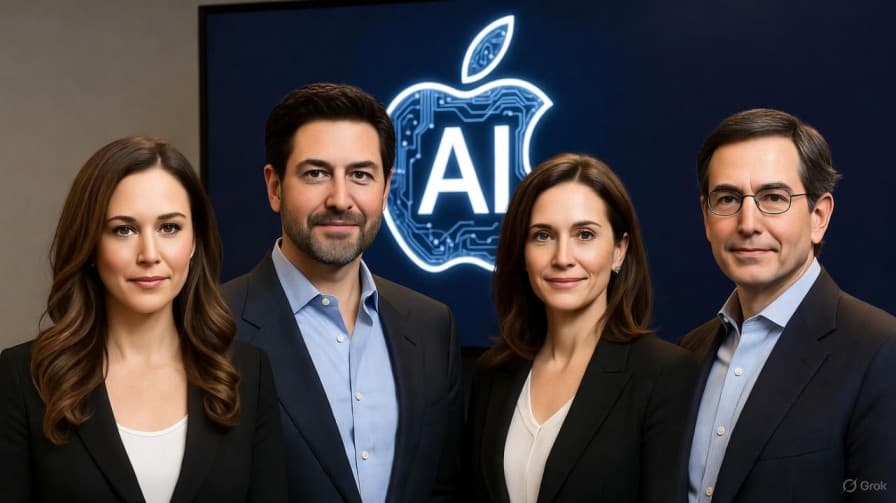

Apple Hit by Major Leadership Exodus
In a rare and striking shake-up, Apple has lost four high-profile leaders across key divisions—AI, legal, policy, and design—within a short span. The departures include Apple’s AI chief, its general counsel, the head of global policy, and a senior design leader. The exits have raised alarms across the tech industry, prompting questions about the company’s internal direction, culture, and long-term AI plans.
Background: A Company Under Pressure
Apple has been facing mounting pressure in recent years—from slowing hardware growth to increased regulatory scrutiny and intensifying competition in artificial intelligence. As rivals such as Google, OpenAI, and Microsoft push rapid AI innovation, Apple has been criticized for moving more cautiously. Internally, shifts in product priorities and organizational restructuring have reportedly created friction among key teams.
The Key Departures
AI Chief Steps Down
Apple’s head of AI—responsible for machine learning, foundational models, and the company’s emerging “Apple Intelligence” platform—has left amid rumors of strategic disagreements. Insiders note that Apple has struggled to keep pace with generative AI breakthroughs, and the leadership loss may signal deeper alignment issues.
General Counsel Exit
The departure of Apple’s top legal officer comes at a critical time. The company is entangled in global antitrust investigations, App Store lawsuits, and regulatory pressure from the EU and U.S. The exit raises questions about continuity in legal strategy at a moment when Apple can least afford disruptions.
Policy VP Leaves Amid Regulatory Heat
Apple’s VP of global policy, who managed government relations and compliance worldwide, has reportedly stepped down as Big Tech faces heightened scrutiny on competition, data practices, and AI governance. The move may reflect broader turbulence in Apple’s regulatory playbook.
Design Leader Departure
A senior design head—part of the team carrying forward Apple’s post-Jony Ive design philosophy—has also exited. This adds strain to an already-transitional design organization trying to balance minimalism with emerging device categories like Vision Pro and wearables.
Why These Departures Matter
Losing leaders across AI, law, policy, and design simultaneously is rare for Apple, whose stability has long been a competitive advantage. These areas sit at the center of the company’s future:
- AI: Core to next-generation iPhone experiences and software ecosystems.
- Legal/Policy: Essential for navigating global regulations and protecting revenue streams.
- Design: Historically Apple’s strongest differentiator and brand identity.
The timing also coincides with Apple’s pivot toward services, AI-powered features, and new hardware categories.
What’s Behind the Shake-Up?
While Apple has not publicly commented on the causes, industry analysts point to:
- Internal debates over AI strategy and partnerships
- Pressure to accelerate innovation after years of incremental updates
- Cultural shifts since the pandemic and hybrid work
- Executive burnout amid regulatory intensity
The challenge of replacing legacy leaders, many of whom spent a decade or more at the company
Challenges Ahead
Apple now faces several risks:
- AI delays if leadership gaps slow development
- Regulatory vulnerability during leadership transition
- Design fragmentation without a unified creative vision
- Investor concerns over stability and innovation pace
These issues could affect upcoming product cycles, including future iPhones, iPads, and Vision Pro updates.
Future Outlook
Despite the turbulence, Apple remains one of the world’s most resilient tech companies. The firm is already recruiting aggressively in AI and has hinted at deeper investments in on-device intelligence and cloud-based models. The leadership resets could offer a chance to pivot and strengthen its strategy—if Apple moves quickly and decisively.
Conclusion
Apple’s loss of four major executives marks one of its most significant leadership disruptions in nearly a decade. As the company navigates a fast-changing AI landscape, regulatory battles, and evolving user expectations, how it fills these roles—and how it adapts its internal culture—may define its next era.