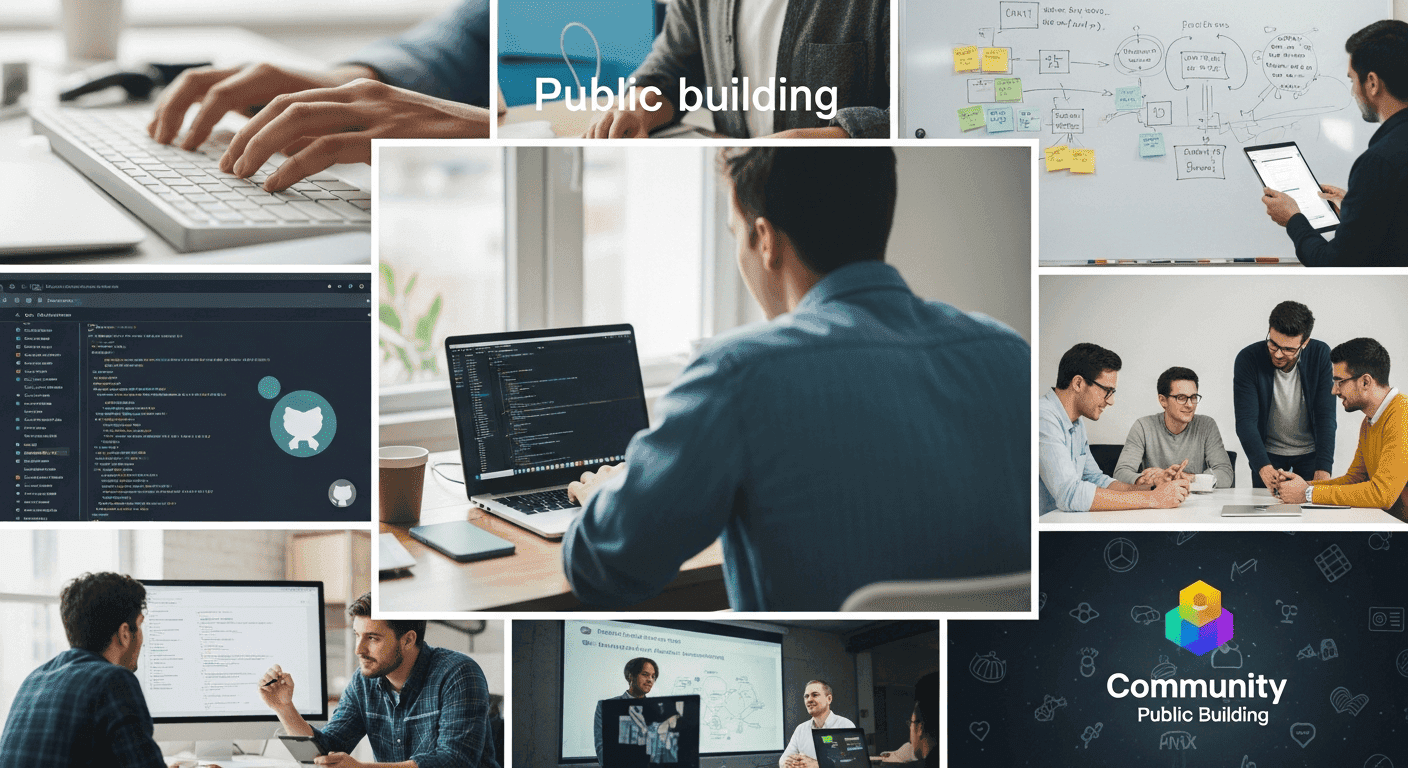

A few years ago, I had dozens of bookmarked coding tutorials and almost nothing to show for them. Every new framework promised mastery, yet my confidence barely moved. Then I noticed a pattern: the developers growing fastest weren’t consuming more content, they were building and sharing unfinished work publicly.
This shift matters because tutorials alone don’t translate into real-world skills. Employers want proof, peers want authenticity, and developers want momentum. Building in public flips learning from passive consumption to active creation. In this article, we’ll explore why this approach works, who’s doing it well, and how you can apply it without burning out.
Background & Context
For years, developer education revolved around courses, tutorials, and certifications. While valuable, research from the World Economic Forum highlights that project-based learning leads to stronger skill retention and problem-solving ability compared to purely theoretical instruction.
GitHub’s developer surveys have consistently shown that a majority of professional developers learn new technologies by working on real projects rather than structured courses alone. Meanwhile, hiring managers increasingly rely on portfolios, repositories, and shipped products to evaluate candidates, as noted in workforce studies by LinkedIn’s Economic Graph team.
Building in public emerges at the intersection of these trends: learning by doing, and proving skills by showing work.
Case Studies
One widely cited example is the rise of open-source contributors who turned side projects into full-time roles. GitHub’s Octoverse reports have highlighted how consistent public contributions correlate with faster career growth and community recognition.
Another case is indie developers who document their progress while building SaaS products. Industry analyses by Stripe and Y Combinator have shown that early public feedback reduces product-market misalignment and accelerates iteration cycles.
A third example comes from junior developers sharing daily progress updates on social platforms. Hiring studies by Indeed indicate that candidates with demonstrable project work are significantly more likely to pass technical screenings than those relying only on credentials.
Lessons Learned
When I started sharing half-finished features and technical write-ups, the fear was real. What if the code wasn’t good enough? What if I looked inexperienced? The opposite happened.
Feedback arrived early, bugs surfaced faster, and conversations replaced isolation. More importantly, building publicly created accountability. Skipping a day felt visible. Over time, the habit replaced motivation. The biggest lesson was simple: progress compounds faster when witnessed, not hidden.
Key Insights
At its core, building in public works because it mirrors real-world development. Software is messy, iterative, and collaborative. Tutorials present clean paths; real projects expose trade-offs.
Educational research published by Harvard’s Graduate School of Education emphasizes that learning accelerates when reflection and feedback are immediate. Public building enforces both. An engineering leader at GitHub once summarized this shift succinctly: “Your portfolio is no longer a PDF; it’s your process.”
This approach also builds narrative skill. Developers learn to explain decisions, justify trade-offs, and communicate impact, skills often undervalued in traditional learning paths but critical in professional environments.
Actionable Advice
- Start small: share progress logs, not polished launches
- Treat feedback as input, not judgment
- Document decisions, not just outcomes
Simple framework to begin:
- Pick one real problem
- Build weekly in public
- Reflect and iterate openly
Our Take
Building in public is less about visibility and more about velocity. Developers who ship openly learn faster, adapt better, and build credibility organically. The biggest risk isn’t being seen too early, it’s waiting too long to start.
Wrap-Up
The era of learning in silence is fading. As software becomes more collaborative and outcomes-driven, developers who build in public gain an unfair advantage. Have you tried sharing your work before it felt ready? What changed when you did?