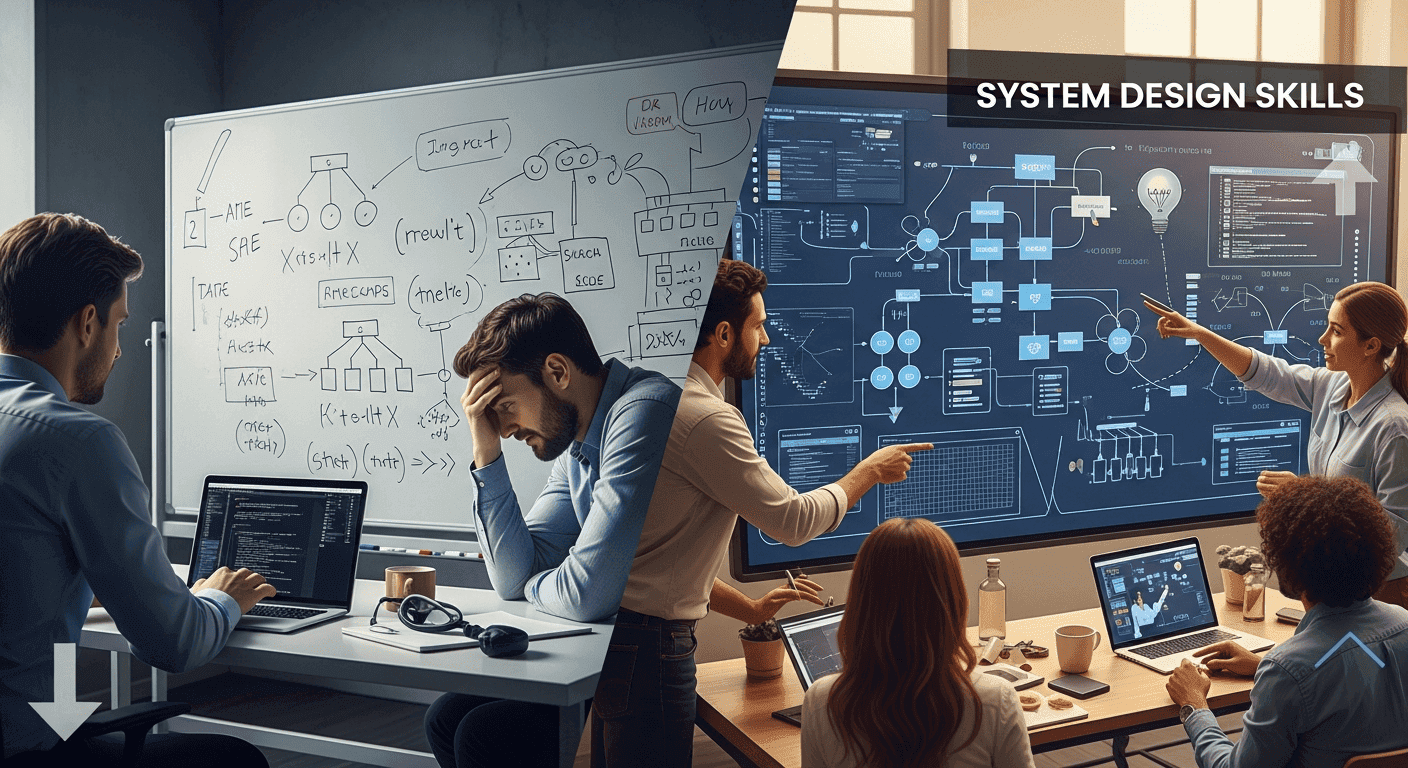

The tech hiring landscape is undergoing a fundamental shift: system design skills are becoming more important than traditional coding interviews. While algorithmic problem-solving once dominated engineering assessments, companies are now prioritizing candidates who can design, scale, and reason about real-world systems. This change matters because modern software rarely fails due to syntax errors; it fails due to poor architecture, scalability bottlenecks, and operational blind spots. Backend engineers, full-stack developers, and senior technical roles are most affected, but even early-career candidates are feeling the shift. As products scale faster and user expectations rise, the ability to think in systems has become a defining career advantage.
Background & Context
For over a decade, coding interviews centered on data structures, algorithms, and timed problem-solving. This approach worked when engineering teams were smaller and systems simpler. However, as cloud computing, distributed systems, and global-scale applications became the norm, interview outcomes began to diverge from on-the-job performance.
Engineering leaders noticed a pattern: candidates who excelled in algorithm puzzles often struggled with designing maintainable, scalable systems. At the same time, experienced engineers with strong architectural instincts sometimes underperformed in traditional coding rounds. This mismatch pushed companies to rethink how they evaluate technical talent, especially for mid-level and senior roles.
Expert Quotes
“Writing correct code is table stakes now,” said Ananya Rao, Director of Engineering at a global SaaS company. “What differentiates strong engineers is how they think about trade-offs, failure modes, and system evolution over time.”
Vikram Desai, a veteran engineering manager, added, “System design interviews reveal how candidates think under ambiguity. That skill directly maps to real production challenges.”
Industry Comparisons
In fast-scaling startups, system design interviews often carry more weight than pure coding rounds, reflecting the need to build reliable systems quickly with limited resources. Large enterprises also emphasize architecture to manage complexity across multiple teams and services.
Compared to earlier hiring models that filtered candidates primarily through algorithmic tests, today’s approach favors holistic evaluation. This mirrors broader industry trends where platform stability, uptime, and scalability are key competitive differentiators, not just feature velocity.
Implications & Why It Matters
For engineers, this shift changes how careers are built. Mastery of frameworks alone is no longer sufficient; understanding databases, caching strategies, message queues, and failure handling is essential. Candidates who invest in system design thinking often progress faster into senior and leadership roles.
For businesses, prioritizing system design reduces long-term technical debt and improves product resilience. Teams staffed with architects rather than just coders are better equipped to handle growth, traffic spikes, and evolving requirements without constant rewrites.
What’s Next
System design interviews are becoming more structured and role-specific. Expect scenarios tailored to real company challenges, such as scaling APIs, designing analytics pipelines, or ensuring high availability. AI-assisted coding tools will further accelerate this trend by reducing the emphasis on manual coding and increasing focus on decision-making, architecture, and oversight.
Pros and Cons
Pros
- Better alignment between interviews and real-world work
- Stronger emphasis on scalability and reliability
- Fairer evaluation of experienced engineers
Cons
- Harder for beginners without production exposure
- More subjective evaluation if poorly structured
- Requires skilled interviewers to assess effectively
Our Take
The rise of system design skills reflects a maturing tech industry that values impact over puzzles. Coding remains important, but architecture is what sustains products at scale. Engineers who learn to think in systems are positioning themselves for long-term relevance in an AI-augmented future.
Wrap-Up
As software complexity grows and AI reshapes development workflows, system design skills are becoming the new hiring currency in tech. Companies that prioritize architectural thinking will build more resilient products, while engineers who adapt will unlock broader, more durable career opportunities.