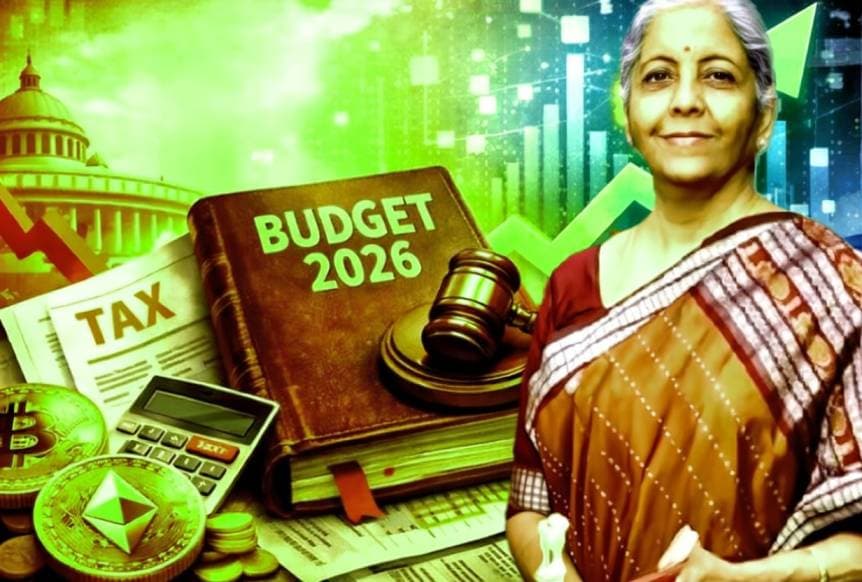

In a significant policy shift announced in the Union Budget 2026-27 on February 1, 2026, India's government has exempted foreign companies from income tax liabilities when providing capital goods, equipment, or tooling to resident contract manufacturers in designated areas. This change directly benefits Apple, which has long lobbied for such relief to scale up iPhone assembly in India without the risk of tax exposure on global profits. The move aligns with Prime Minister Narendra Modi's push for electronics manufacturing and could accelerate Apple's diversification away from China.
Background
Apple has steadily expanded its manufacturing footprint in India over recent years, driven by geopolitical tensions, supply chain resilience needs, and government incentives like the Production Linked Incentive (PLI) scheme. Key partners such as Foxconn and Tata Electronics have invested billions in facilities across Tamil Nadu and Karnataka, producing iPhones primarily for export. However, a longstanding provision in India's income tax laws treated foreign ownership of manufacturing equipment as creating a "business connection," potentially subjecting global iPhone profits to Indian taxation—a risk absent in China's established model. This concern had forced local partners to bear the full cost of high-end machinery, limiting faster scaling.
Key Developments
Finance Minister Nirmala Sitharaman presented the budget, which includes amendments to exempt income from providing such equipment to contract manufacturers for up to five years (until the 2030-31 tax year). The relief applies specifically to factories in customs-bonded areas, treated as outside India's customs territory for export-focused operations. "Any income arising on account of providing capital goods, equipment or tooling to a contract manufacturer... is eligible for exemption," stated an official explanatory document. Revenue Secretary Arvind Shrivastava emphasized the intent: "We are giving them certainty" by exempting foreign firms for five years when their machines are used by local manufacturers.
This addresses Apple's specific model, where it supplies specialized, high-precision assembly equipment while retaining ownership to maintain quality standards.
Implications
The policy removes a "deal-breaking risk" for electronics manufacturing, as noted by tax expert Shankey Agrawal of BMR Legal. It lowers barriers for Apple and similar firms to invest directly in equipment, reducing upfront costs for Indian partners and enabling quicker capacity expansion. This supports India's goal of becoming a global electronics hub, potentially boosting jobs, exports, and economic growth in states like Tamil Nadu and Karnataka. For Apple, it strengthens its China+1 strategy amid ongoing diversification efforts.
Challenges
The exemption is time-bound (five years) and restricted to customs-bonded, export-oriented facilities—domestic sales from these plants would still attract import duties. Broader tax implications for non-bonded setups remain unchanged, and the policy does not fully resolve all legacy concerns under older tax frameworks. Critics note that while it aids foreign investors, it must balance with India's fiscal interests in taxing business activities.
Future Outlook
This could catalyze rapid growth in India's iPhone output, building on recent milestones where exports have surged. Analysts anticipate it will encourage deeper localization, component manufacturing, and further investments from Apple suppliers. Combined with ongoing PLI benefits, it positions India to capture a larger share of global smartphone production in the coming years.
Conclusion
India's proactive tax relief signals strong commitment to attracting high-tech manufacturing giants like Apple. By eliminating a key uncertainty, the government has cleared a path for sustained expansion—making this budget announcement a pivotal step worth watching for the future of global electronics supply chains.