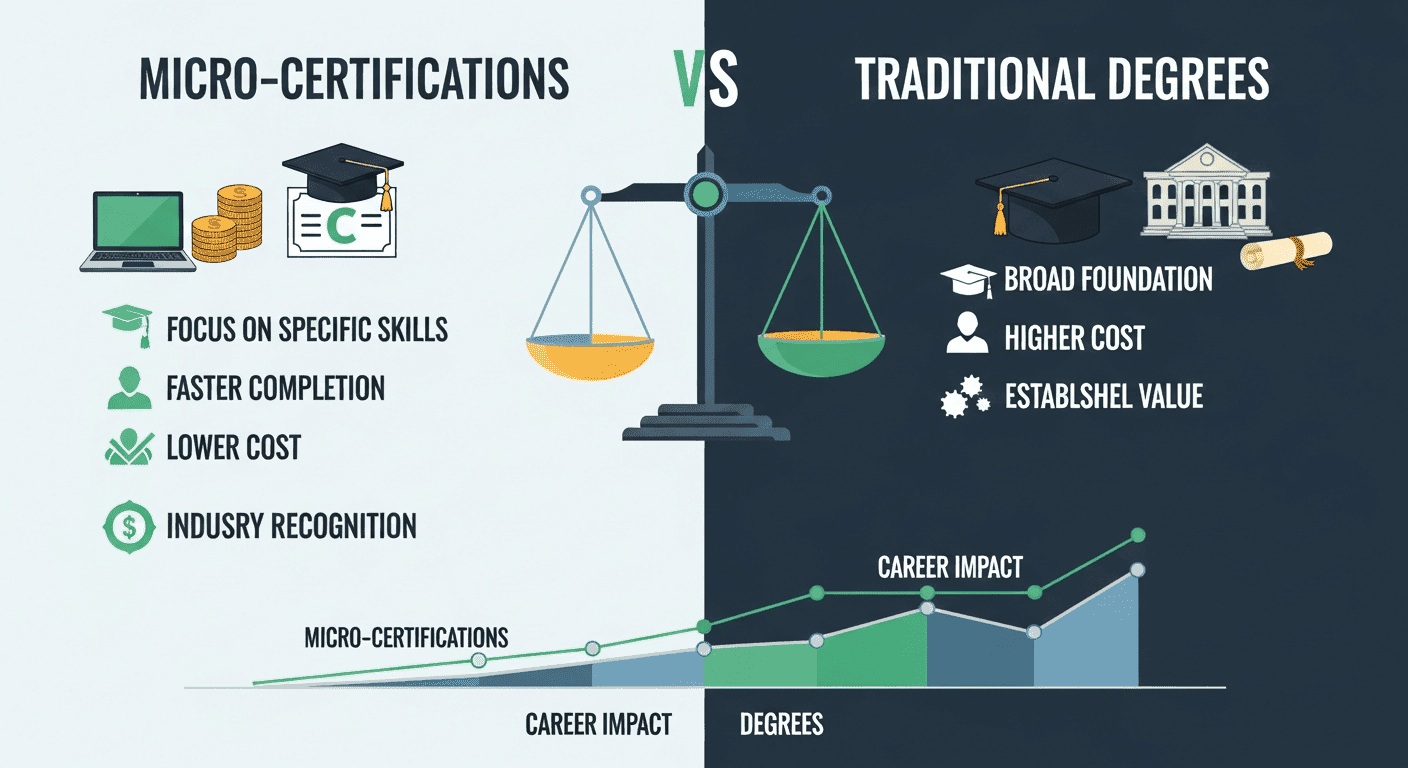

Micro-certifications are short, skill-focused courses designed to teach specific technologies such as cloud platforms, data analytics, cybersecurity, or AI tools. They compete directly with traditional computer science degrees, coding bootcamps, and corporate training programs. Instead of years of theory, they emphasize hands-on learning, projects, and assessments that mirror real-world tasks.
Design, Build & Display
The “design” of micro-certifications is minimal but purposeful. Courses are modular, video-led, and often mobile-friendly. Dashboards track progress clearly, while assessments are structured around practical outputs rather than exams. Durability depends on platform updates—courses tied to fast-moving tech can feel outdated within a year if not refreshed regularly.
Software / Interface / Features
Most micro-certification platforms offer clean interfaces with bite-sized lessons, labs, and quizzes. AI-assisted grading, adaptive learning paths, and real-time feedback are increasingly common features. The strongest programs integrate capstone projects that simulate workplace scenarios, which significantly improves skill retention and employer perception.
Performance, Benchmarks & Battery
In performance terms, micro-certifications excel at rapid skill acquisition. Learners often become productive with a specific tool or framework within weeks. However, benchmarking against degree holders shows gaps in foundational knowledge such as algorithms, systems thinking, and long-term problem-solving. There’s no “battery life” issue, but skill relevance can drain quickly if learners don’t keep updating credentials.
Features
The standout feature is industry alignment. Many certifications mirror the exact tools used in professional environments, from cloud consoles to analytics dashboards. Some include proctored exams and digital badges that integrate into hiring systems, adding credibility beyond simple course completion.
Value for Money
Micro-certifications are significantly cheaper than degrees, often costing a fraction of a single semester’s tuition. Entry-level courses target beginners, while advanced tracks cater to working professionals. In terms of ROI, they offer excellent short-term value for role-specific skills but weaker long-term brand recognition compared to accredited degrees.
Conclusion
Micro-certifications are ideal for professionals looking to upskill, switch roles within tech, or stay current with fast-evolving tools. They are less suitable as a complete replacement for degrees when foundational knowledge, leadership roles, or cross-disciplinary credibility is required. Think of them as performance upgrades, not a full system replacement.
Our Take
Micro-certifications are one of the most practical education tools in modern tech careers, especially when paired with real experience. They don’t kill degrees, but they clearly outperform them for speed, cost, and immediate employability. The smartest path blends both.