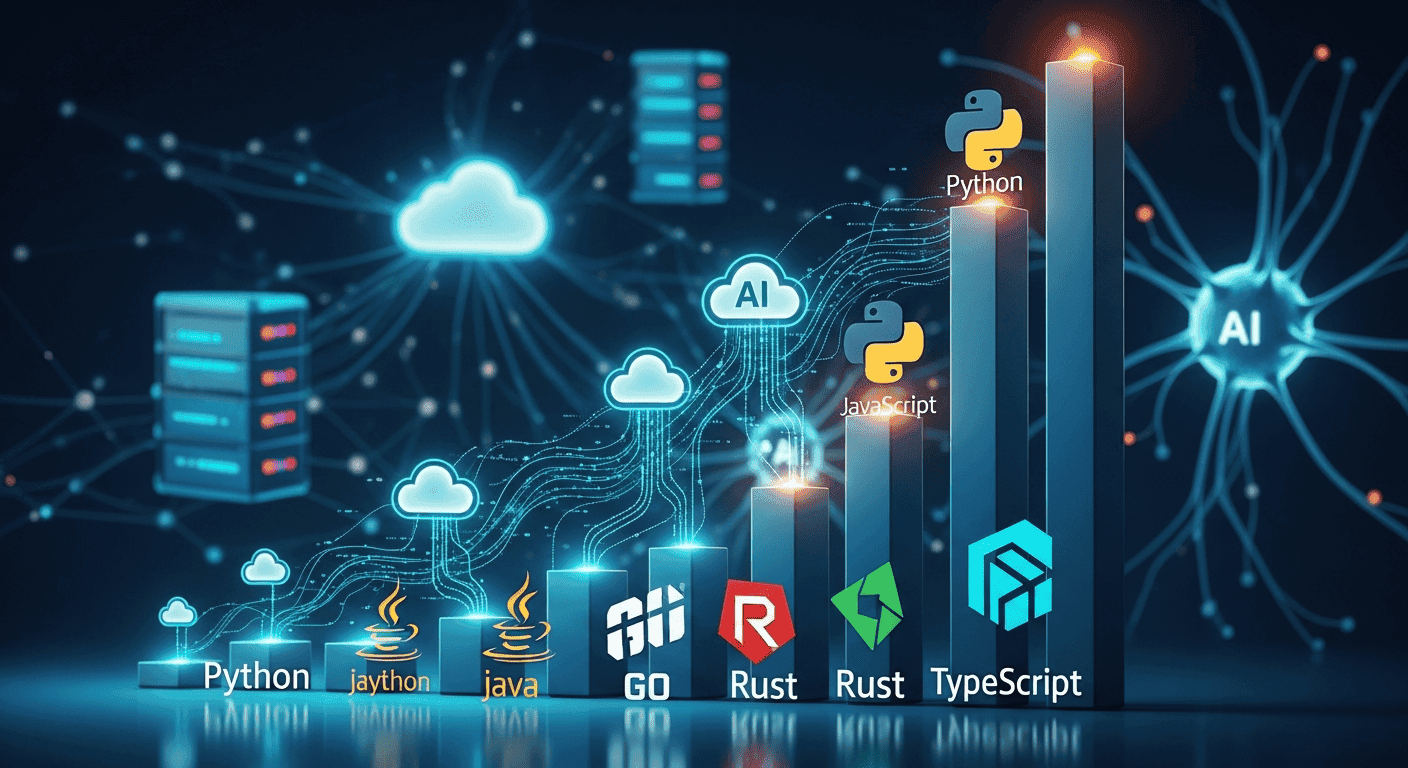

Programming languages are experiencing a fresh wave of attention as AI adoption accelerates, cloud services expand, and businesses re-evaluate their tech stacks. Developers are moving toward languages that offer high performance, strong ecosystem support, and seamless integration with emerging AI workflows. The trend affects software teams, enterprises modernizing infrastructure, and new developers entering the industry. With organizations prioritizing scalability, speed, and security, language choice has become a strategic decision, not just a preference.
Background & Context
Programming language popularity shifts every few years depending on innovation cycles, ecosystem growth, and business needs. Python rose to dominance during the machine-learning boom. JavaScript became unavoidable with the rise of web and mobile apps. More recently, Rust and Go gained adoption as cloud-native platforms and microservices architectures pushed developers toward safer and highly concurrent technologies.
The ongoing AI revolution has triggered another shift. Developers now prioritize languages that integrate well with AI workflows, support high-performance computing, or enable rapid deployment across distributed systems.
Key Facts / What Happened
- Python remains a top choice for AI, automation, and backend development due to its vast library ecosystem.
- JavaScript and TypeScript dominate full-stack development and continue expanding through massive frameworks and cloud tooling.
- Rust adoption is growing rapidly as companies embrace memory-safe and concurrency-friendly languages for secure infrastructure.
- Go remains a popular choice for cloud services, DevOps, and distributed systems due to its simplicity and performance.
- Java and C# retain strong enterprise relevance, supported by mature ecosystems and large-scale deployments.
- Emerging languages like Kotlin and Swift strengthen their presence in mobile and cross-platform development.
Voices & Perspectives
“Developers want languages that help them ship faster while staying secure. That’s why memory-safe languages and AI-friendly ecosystems are gaining momentum,” said software architect Nihar Malhotra.
Industry consultant Arpita Shah adds, “The rise of generative AI has made Python, TypeScript, and Rust the top choices for teams balancing innovation and reliability.”
Implications
Shifts in programming language popularity influence hiring patterns, architecture decisions, and long-term product roadmaps.
- For developers: Learning AI-compatible and cloud-native languages opens new career pathways.
- For enterprises: Modernizing systems with secure and scalable languages reduces long-term technical debt.
- For the global software ecosystem: More languages gain relevance, reducing over-reliance on a small set of legacy technologies.
This evolution strengthens overall software security, performance, and innovation velocity.
What’s Next / Outlook
The next two years are expected to drive even stronger alignment between programming languages and AI workflows. Memory-safe ecosystems will become a major priority as cyber risks increase. Embedded AI coding assistants and automated refactoring tools will influence how quickly organizations can shift languages. Cross-platform frameworks may boost Kotlin, Swift, and TypeScript further as companies aim to build unified experiences across devices.
Pros and Cons
Pros
- Better alignment with AI and cloud workflows
- Increased focus on security through modern languages
- Higher developer productivity via cleaner syntax and tooling
Cons
- Legacy migration remains costly and time-consuming
- Skill gaps may widen between new and experienced developers
- Ecosystem fragmentation can increase complexity
OUR TAKE
Programming languages are entering a transformative phase driven by AI, cloud-native architecture, and the need for safer software. Languages that balance performance with accessibility will dominate the next decade. The shift reflects a global industry maturing toward secure, scalable, developer-friendly ecosystems. This evolution ultimately benefits both businesses and the broader tech community.
Wrap-Up
Programming language popularity is reshaping modern development, influencing everything from team skills to enterprise strategy. With AI acceleration, new security standards, and cloud-native workflows, the languages developers choose today will influence the software landscape for years to come.