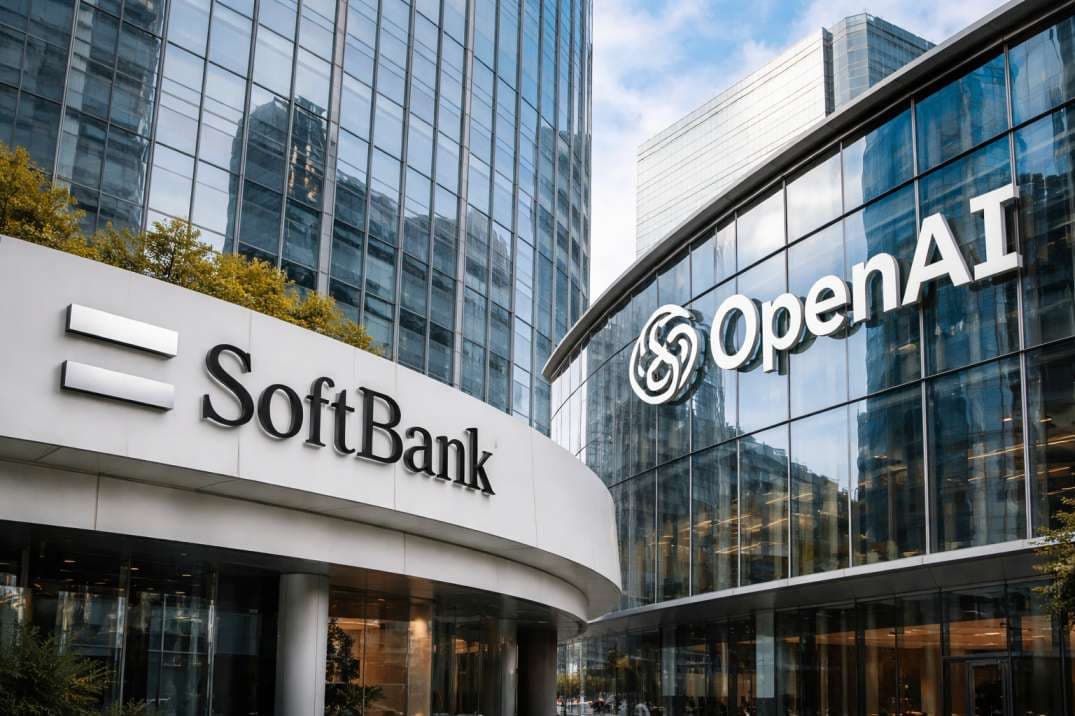

SoftBank Group is reportedly holding discussions to invest up to an additional $30 billion in OpenAI, the company behind ChatGPT. According to sources familiar with the matter, this commitment could form part of a larger funding round aiming to raise as much as $100 billion, pushing OpenAI's valuation toward $830 billion. The talks, reported January 27, 2026, highlight Masayoshi Son's aggressive push to dominate the AI landscape and address OpenAI's soaring costs for training cutting-edge models.
Background
OpenAI has attracted unprecedented capital since ChatGPT's 2022 debut sparked the generative AI boom. The company shifted to a capped-profit model and secured major backing from Microsoft and others. In 2025, SoftBank—under visionary CEO Masayoshi Son—committed heavily, finalizing a $41 billion investment by December that delivered an roughly 11% stake. This included an initial $7.5 billion tranche, a $22.5 billion follow-on, and syndicated co-investments. Son's strategy involved liquidating positions like Nvidia shares to fuel AI bets, reflecting his belief that software models, not just hardware, will capture most long-term value.
Key Developments
The latest discussions center on SoftBank adding up to $30 billion more, per people with knowledge of the talks. This would contribute to a potential $100 billion round valuing OpenAI at approximately $830 billion—far above recent secondary market estimates around $500 billion. OpenAI has also engaged other players, including Amazon and Nvidia, for participation. Neither company has commented officially, but the scale underscores investor willingness to fund massive compute and talent needs in a hyper-competitive field.
Implications
A deal of this magnitude would give OpenAI firepower to accelerate frontier model training, expand global reach, and maintain leadership against rivals like Google. For the broader AI ecosystem, it signals that private capital remains abundant for top-tier players, potentially speeding breakthroughs in reasoning, multimodality, and agentic systems. Economically, it could reshape industries from drug discovery to autonomous operations, while reinforcing U.S. advantages in AI infrastructure amid geopolitical tensions.
Challenges
OpenAI's costs for data centers, energy, and top researchers continue climbing rapidly, with competition intensifying. Such enormous rounds risk overvaluation if revenue growth or model progress lags expectations. Concentrated exposure for SoftBank could amplify volatility if regulatory pressures around AI safety, data privacy, or antitrust grow. Governance questions in high-stakes AI development also linger as scrutiny increases.
Future Outlook
Success here could supercharge initiatives like the Stargate project—a multi-hundred-billion-dollar effort involving SoftBank, OpenAI, and partners to construct vast AI data centers. It may pave the way for future liquidity events or an eventual IPO. As AI infrastructure demands explode, this round could set new benchmarks for private funding scale and influence global tech competition.
Conclusion
SoftBank's reported pursuit of another $30 billion stake in OpenAI marks one of the boldest moves yet in the AI arms race. With Masayoshi Son going all-in, this development underscores the massive capital flowing into artificial intelligence—and why OpenAI remains at the epicenter. Investors and tech watchers alike will track these talks closely, as the outcome could define the next chapter of AI