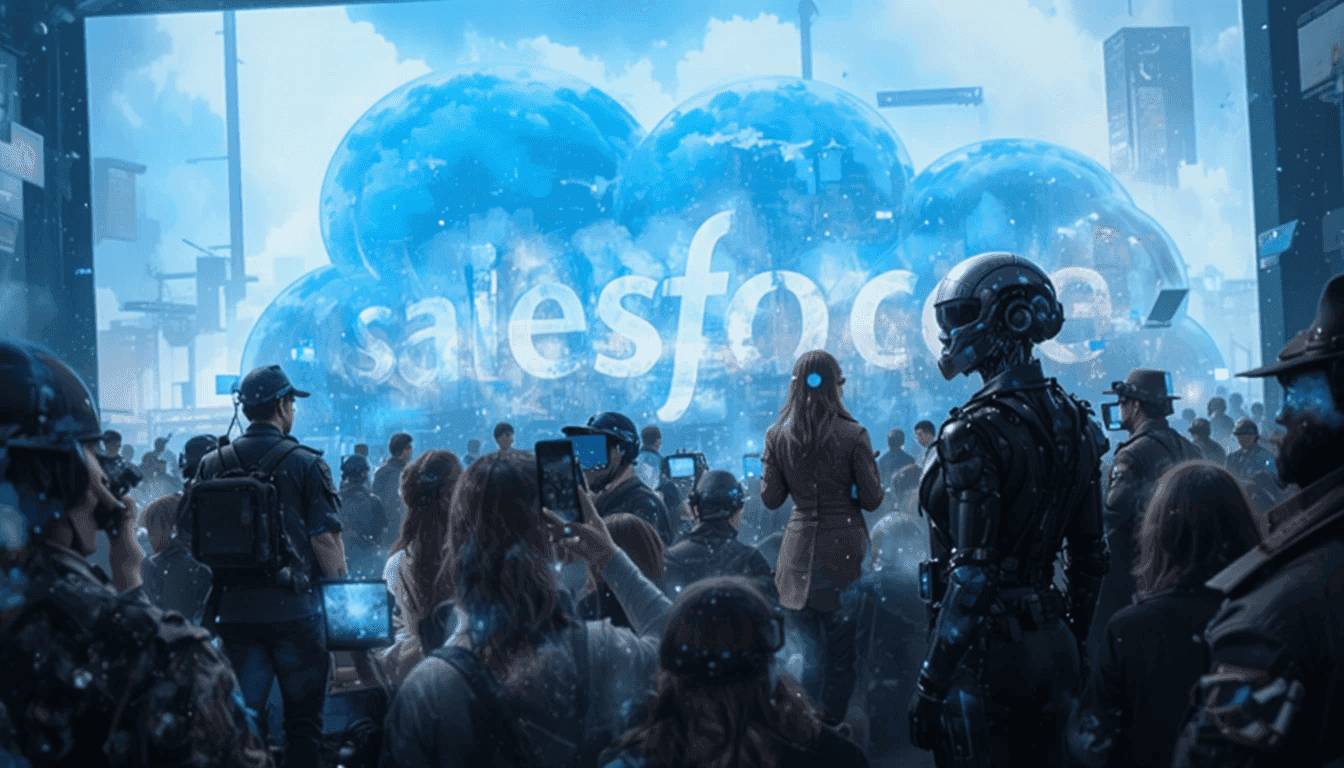

Salesforce’s recent move to cut roughly 4,000 jobs has intensified scrutiny around its aggressive push into artificial intelligence. The layoffs come at a time when the company is publicly championing AI-driven productivity, efficiency, and cost optimization across its product portfolio. While leadership frames the decision as a strategic realignment, the timing has triggered broader concerns about whether AI is replacing human talent faster than organizations can responsibly adapt. For customers and enterprise buyers, the episode raises a critical question: can AI-led transformation be trusted if it appears to come at the expense of people? This moment places Salesforce at the center of a wider industry debate about automation, ethics, and long-term trust.
Background & Context
Salesforce has spent the past two years repositioning itself as an AI-first enterprise software company. Its roadmap increasingly emphasizes generative AI, autonomous agents, and predictive automation embedded directly into CRM workflows. At the same time, the global tech sector has been undergoing cost corrections, with companies prioritizing efficiency and margin protection after years of rapid hiring.
The decision to reduce headcount is framed internally as a shift toward high-impact roles aligned with AI development and deployment. However, Salesforce has long marketed itself as a people-centric organization with a strong emphasis on culture and employee well-being. The contrast between that narrative and large-scale layoffs has amplified concerns about how AI strategies are reshaping corporate values across the tech industry.
Expert Quotes / Voices
A senior enterprise technology analyst noted, “AI transformation is no longer just a technical decision. It’s a trust decision. When employees are laid off while AI investment accelerates, stakeholders naturally question the intent and governance behind that transformation.”
An industry executive familiar with enterprise SaaS transitions added, “Customers want AI, but they also want stability. They need assurance that automation won’t erode support quality, product expertise, or long-term partnership value.”
These perspectives reflect a growing consensus that AI success depends as much on human alignment as on technological capability.
Market / Industry Comparisons
Salesforce is not alone in navigating this tension. Across enterprise software, competitors are rolling out AI copilots, agents, and workflow automation while simultaneously streamlining operations. However, Salesforce’s scale and influence make its actions particularly visible.
Unlike smaller startups that position AI as a disruptive replacement from day one, Salesforce operates at the core of mission-critical enterprise systems. This places higher expectations on responsible AI adoption, workforce transition planning, and transparent communication. In comparison, peers that pair AI expansion with aggressive reskilling programs have faced less public skepticism, highlighting how execution strategy shapes perception.
Implications & Why It Matters
For employees, the layoffs reinforce fears that AI adoption could accelerate job displacement without sufficient reskilling pathways. For customers, the concern is more subtle but equally important: trust in AI-enabled platforms depends on confidence that systems are well-supported, ethically governed, and continuously improved by experienced teams.
At an industry level, Salesforce’s situation underscores a broader shift. AI is no longer viewed solely as an innovation layer; it is becoming a structural force that reshapes organizational design. How companies manage that shift will influence talent retention, brand reputation, and long-term customer loyalty.
What’s Next
Salesforce is expected to continue expanding AI capabilities across sales, service, marketing, and analytics. Future announcements are likely to focus on autonomous agents, deeper workflow automation, and measurable productivity gains. At the same time, stakeholders will closely watch whether the company increases investment in reskilling, internal mobility, and AI governance frameworks.
Clear communication around how human expertise complements AI systems will be critical. Enterprises adopting Salesforce’s tools will also demand stronger assurances around reliability, accountability, and ethical deployment.
Pros and Cons
Pros
- Accelerated AI innovation and faster product iteration
- Potential productivity gains for enterprise customers
- Streamlined operations aligned with long-term automation goals
Cons
- Erosion of employee trust and morale
- Customer concerns about support depth and continuity
- Public perception risks around AI replacing human roles
Our Take
Salesforce’s AI strategy is technologically sound but socially delicate. The company’s challenge is no longer proving what AI can do, but proving how responsibly it can be integrated into a people-driven enterprise ecosystem. Trust, not capability, will be the defining metric of success. How Salesforce balances automation with human investment will shape its credibility well beyond this layoff cycle.
Wrap-Up
The Salesforce layoff episode reflects a defining moment for enterprise AI adoption. As automation becomes inseparable from business strategy, companies must demonstrate that innovation and responsibility can coexist. For Salesforce, rebuilding trust may prove just as important as building the next generation of AI-powered tools.