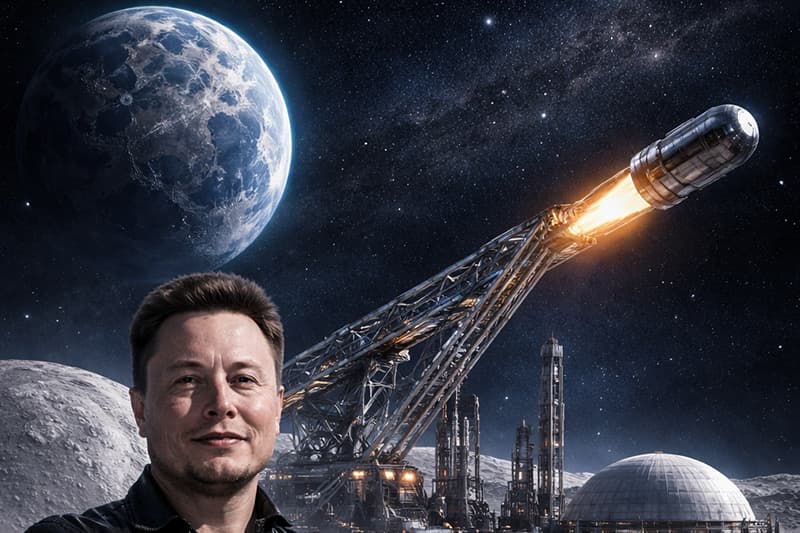

With key co-founders stepping away and speculation mounting around a potential SpaceX IPO, Elon Musk is redirecting attention to the Moon. The renewed focus on lunar missions comes at a pivotal moment for the company’s leadership structure and long-term funding strategy. By spotlighting deep-space ambitions, Musk appears to be reinforcing SpaceX’s founding vision while calming investor and industry concerns. The shift underscores how narrative, technology, and capital are increasingly intertwined in the commercial space race.
Background
SpaceX has spent the past decade transforming from an upstart launch provider into the dominant force in commercial spaceflight. Reusable rockets, satellite mega-constellations, and government launch contracts have fueled rapid growth and soaring valuation estimates.
However, the company’s leadership bench has evolved. Several early leaders and co-founding figures who helped shape SpaceX’s engineering and business operations have gradually exited or reduced day-to-day involvement. Such transitions are common as startups mature—but they often intensify scrutiny when paired with IPO speculation.
An eventual public offering has long been discussed informally, particularly as SpaceX’s capital needs expand alongside Starship development and deep-space ambitions.
Key Developments
In recent remarks and internal messaging, Musk has increasingly emphasized lunar objectives—reviving public attention on Moon transport, cargo delivery, and infrastructure building.
Central to this vision is Starship, SpaceX’s fully reusable heavy-lift spacecraft designed to carry both crew and cargo beyond Earth orbit. The vehicle is positioned as the backbone for:
- Lunar lander missions
- Surface cargo deployment
- Future Moon base logistics
- Deep-space mission testing
Musk has framed the Moon not just as a destination, but as a proving ground for Mars—SpaceX’s ultimate long-term goal.
Industry analysts note that foregrounding lunar milestones helps anchor SpaceX’s valuation story in tangible, near-term exploration wins rather than distant Martian timelines.
Technical Explanation
In simple terms, Starship functions like a next-generation space transport system—think of it as a fully reusable “space freight train.”
Unlike traditional rockets that burn up or fall into the ocean after launch, Starship is designed to:
- Launch vertically
- Refuel in orbit
- Travel to the Moon or beyond
- Land and relaunch multiple times
This reusability dramatically reduces cost per mission, making sustained lunar operations financially plausible rather than purely symbolic.
Implications
For investors:
A Moon-first narrative offers clearer commercial pathways—government contracts, research payloads, and infrastructure partnerships.
For the space industry:
It signals intensifying competition in lunar logistics, mining research, and satellite staging.
For geopolitics:
Private firms are becoming central players in lunar presence, historically dominated by national space agencies.
The messaging shift also reinforces SpaceX’s dual identity: a commercial launch provider and a civilization-scale exploration company.
Challenges
Despite the optimism, hurdles remain:
- Starship testing risks: Development delays and regulatory reviews continue.
- Capital intensity: Deep-space infrastructure requires sustained funding.
- Leadership transitions: Loss of institutional knowledge can slow execution.
- IPO complexity: Public markets demand predictable revenue—harder in exploration ventures.
Critics argue that visionary reframing can sometimes outpace technical readiness, creating expectation gaps.
Future Outlook
If IPO plans solidify, lunar progress could become a centerpiece of investor communications—milestones, contracts, and mission timelines serving as valuation catalysts.
Upcoming areas to watch include:
- Crewed lunar landing demonstrations
- Cargo delivery partnerships
- Orbital refueling breakthroughs
- Government exploration contracts
Success on these fronts would position SpaceX not just as a launch company, but as the logistics backbone of the Moon economy.
Conclusion
As leadership reshuffles and IPO chatter intensifies, Elon Musk is returning SpaceX’s story to its exploratory roots. By putting the Moon back in focus, he’s aligning technological progress with investor narrative—reminding stakeholders that the company’s ambitions extend far beyond Earth orbit.