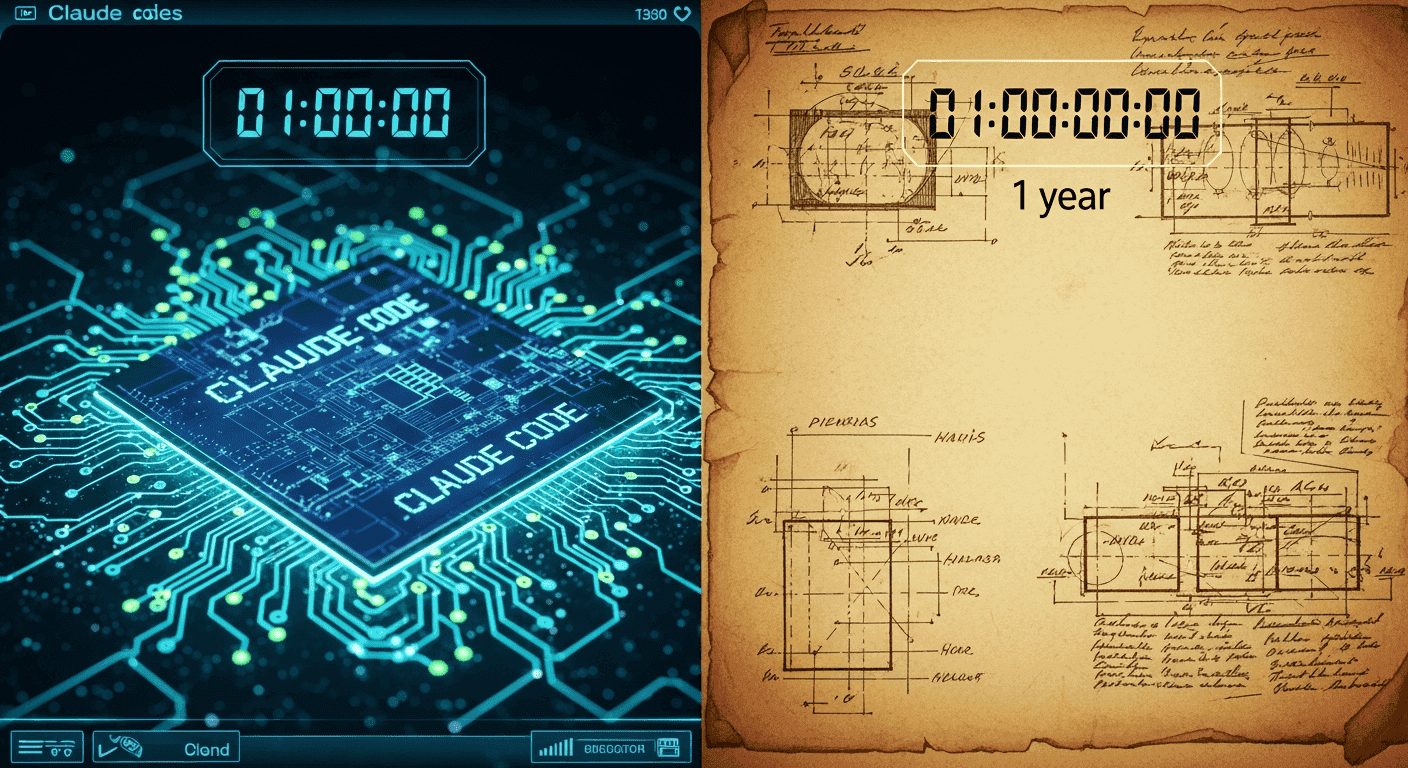

A senior Google engineer recently stated that Claude Code completed a production-level internal tool in just one hour—work that previously required her team nearly a year to build. The comment quickly resonated across the tech industry, not as a boast, but as a stark illustration of how rapidly AI-assisted development is advancing.
The moment matters because it reframes how time, effort, and value are measured in modern software engineering. For developers, managers, and enterprises, it raises urgent questions about productivity expectations, skill relevance, and how engineering teams will be structured in an AI-first era.
Background & Context
Over the past two years, generative AI has steadily moved from code suggestion tools to full-fledged software collaborators. Early systems focused on autocomplete and debugging assistance. Newer models, including Claude Code, can reason across large codebases, design system architecture, write tests, and refactor legacy components with minimal human input.
Inside large technology companies, internal tools often take months or years due to coordination costs, reviews, testing, and evolving requirements. The Google engineer’s statement underscores that AI is now capable of compressing not just coding time, but also design and iteration cycles that once demanded large teams.
Expert Quotes / Voices
A senior engineering leader involved in AI tooling said, “What changed isn’t that engineers became slower. It’s that AI can now hold architectural context and execute without fatigue or fragmentation.”
An AI industry analyst added, “This isn’t about replacing developers overnight. It’s about collapsing timelines. When build cycles shrink from months to hours, organizational strategy has to change.”
A product executive familiar with enterprise adoption noted, “The competitive edge now comes from how well teams orchestrate AI, not how many developers they employ.”
Market / Industry Comparisons
Similar productivity leaps are being observed across the industry. AI-assisted development platforms are increasingly delivering end-to-end prototypes in days instead of quarters. Startups are shipping products with teams a fraction of the size previously required, while large enterprises are reevaluating headcount allocation.
What sets this incident apart is the comparison within a company known for engineering rigor and scale. If a year-long internal effort can be replicated in an hour, traditional benchmarks for velocity, staffing, and cost efficiency are being fundamentally disrupted.
Implications & Why It Matters
For engineers, the message is not obsolescence but evolution. Skills in problem framing, system oversight, security judgment, and business context are becoming more valuable than manual implementation.
For businesses, AI-driven development promises dramatic cost savings and faster innovation cycles. However, it also introduces risks around overreliance, hidden bugs, and governance.
For the industry, the statement signals a transition point: software development is shifting from a labor-intensive craft to a high-level orchestration discipline.
What’s Next
Organizations are expected to redefine engineering roles, with smaller teams managing larger AI outputs. Hiring may shift toward senior engineers capable of validating and guiding AI-generated systems.
Tooling will also evolve, focusing more on explainability, compliance, and collaboration between humans and AI. Companies that adapt early are likely to outpace competitors still operating on pre-AI timelines.
Pros and Cons
Pros
- Massive reduction in development time
- Lower costs for building and iterating software
- Faster experimentation and innovation
Cons
- Risk of hidden technical debt
- Increased need for oversight and validation
- Potential skills gap for engineers who do not adapt
Our Take
This moment is less about Claude Code’s raw speed and more about what it reveals: software timelines were never fixed—they were human-limited. AI has removed many of those limits. The winners will be teams that learn to direct, verify, and strategically deploy AI rather than compete with it.
Wrap-Up
The Google engineer’s statement may be remembered as a turning point in how software work is valued and measured. As AI compresses years of effort into hours, the future of engineering will belong to those who can think bigger, faster, and more responsibly than ever before.