
The Big Picture
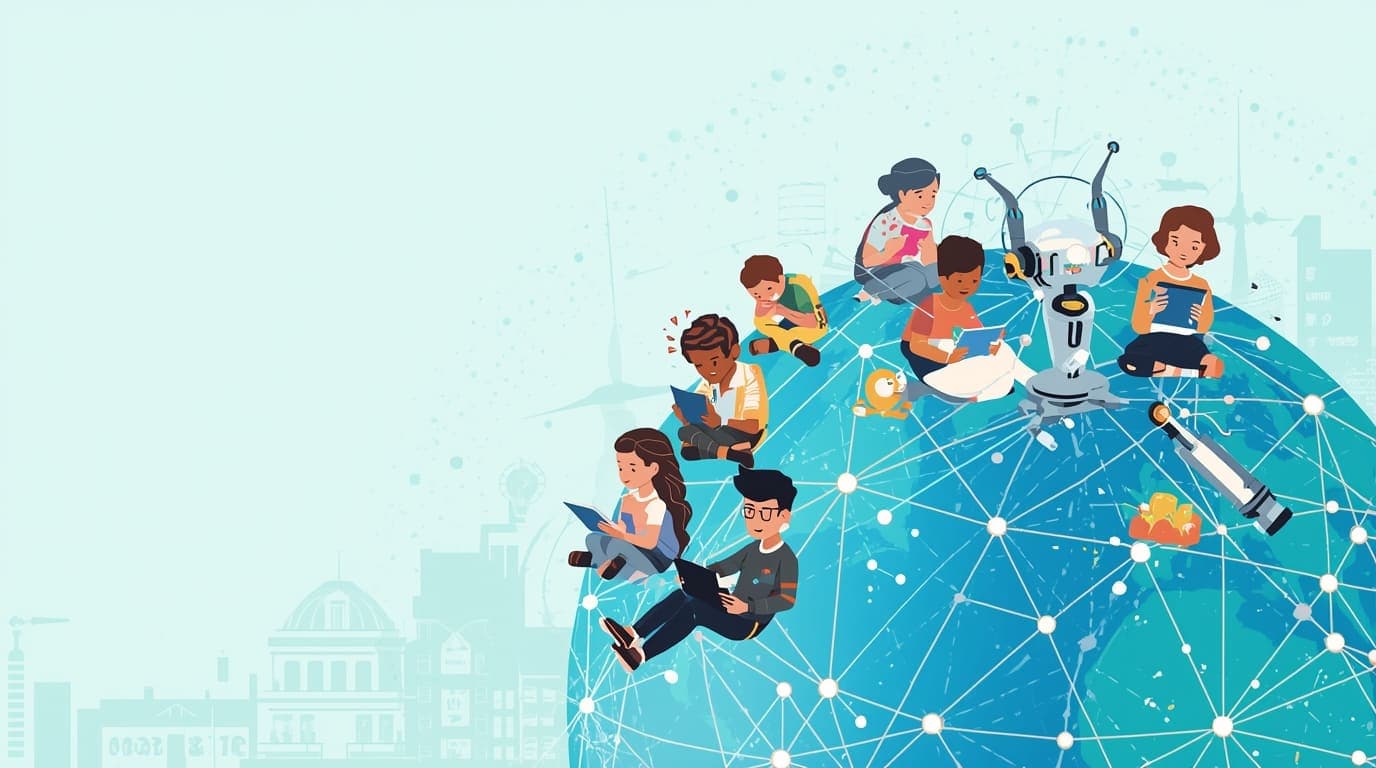
Education has long been constrained by geography, cost, language barriers, and uneven access to quality teachers. Artificial Intelligence is emerging as a powerful equalizer, capable of personalizing learning, scaling quality education, and reaching learners who were historically left behind. The promise of “Education for All” is no longer just an idealistic goal—it is becoming technically achievable.
Personalized Learning at Scale
One Teacher, Millions of Learning Paths
Traditional classrooms follow a one-size-fits-all approach. AI changes this by adapting lessons to individual students’ pace, strengths, and gaps. An AI-powered learning system can identify where a student struggles in mathematics, simplify explanations, add practice questions, or switch teaching styles instantly.
This means:
- Slow learners get more time and reinforcement
- Fast learners are challenged instead of held back
- Every student receives a customized curriculum
Personalization was once a luxury reserved for private tutoring. AI makes it scalable and affordable.
Breaking Language and Literacy Barriers
Learning in Any Language, Anytime
Language remains one of the biggest obstacles to education access. AI-driven translation and voice technologies allow educational content to be delivered in local languages, dialects, and even voice-based formats.
Key impacts include:
- Students learning in their mother tongue
- Illiterate adults accessing education through voice interfaces
- Teachers creating content once and delivering it in multiple languages
This is especially transformative for rural and underserved regions where formal education materials are limited.
Expanding Teacher Reach and Support
AI as a Teaching Assistant, Not a Replacement
AI does not replace teachers—it amplifies them. Automated grading, attendance tracking, lesson planning assistance, and performance analysis reduce administrative workload. Teachers can focus more on mentoring, creativity, and emotional support.
In teacher-scarce regions, AI tutors can:
- Answer student questions after school hours
- Provide revision support before exams
- Assist substitute or under-trained teachers
This dramatically improves learning continuity and quality.
Affordable, Always-Available Education
Learning Beyond Classrooms and Timetables
AI-powered education platforms work 24/7 and require only basic devices. Students can learn from smartphones, shared computers, or community centers.
Benefits include:
- Lower infrastructure costs
- Education access for working students and dropouts
- Lifelong learning opportunities for adults
This flexibility brings education to people instead of forcing people to come to education.
Identifying and Supporting At-Risk Students Early
Prevention Over Correction
AI systems can detect patterns that signal dropout risk, learning difficulties, or disengagement. Early alerts allow schools and communities to intervene before students fall behind permanently.
Examples of early intervention:
- Extra tutoring for struggling learners
- Counseling support for disengaged students
- Adaptive content for learning disabilities
Early action improves retention and long-term outcomes.
Skill-Based and Future-Ready Learning
From Degrees to Capabilities
AI enables education systems to move beyond rote learning and toward skill-based education. Students can learn practical skills such as problem-solving, digital literacy, communication, and critical thinking through simulations and interactive assessments.
This shift:
- Aligns education with real-world jobs
- Prepares students for automation-driven economies
- Encourages creativity and innovation
Education becomes relevant, not just theoretical.
Challenges That Must Be Addressed
Technology Alone Is Not Enough
AI-driven education still faces hurdles:
- Digital divide and internet access gaps
- Data privacy and ethical concerns
- Over-reliance on automation
- Need for teacher training and human oversight
Without thoughtful implementation, AI can widen inequality instead of reducing it.
The Road Ahead
AI is not a silver bullet, but it is a powerful catalyst. When combined with inclusive policies, affordable connectivity, and human-centered design, AI can democratize knowledge on an unprecedented scale. The dream of “Education for All” shifts from aspiration to actionable reality.
OUR TAKE
AI’s real value in education lies not in replacing teachers or classrooms, but in removing barriers that have excluded millions for generations. The future of education will be hybrid—human-led, AI-supported, and globally accessible. If implemented responsibly, AI can turn education from a privilege into a universal right.